
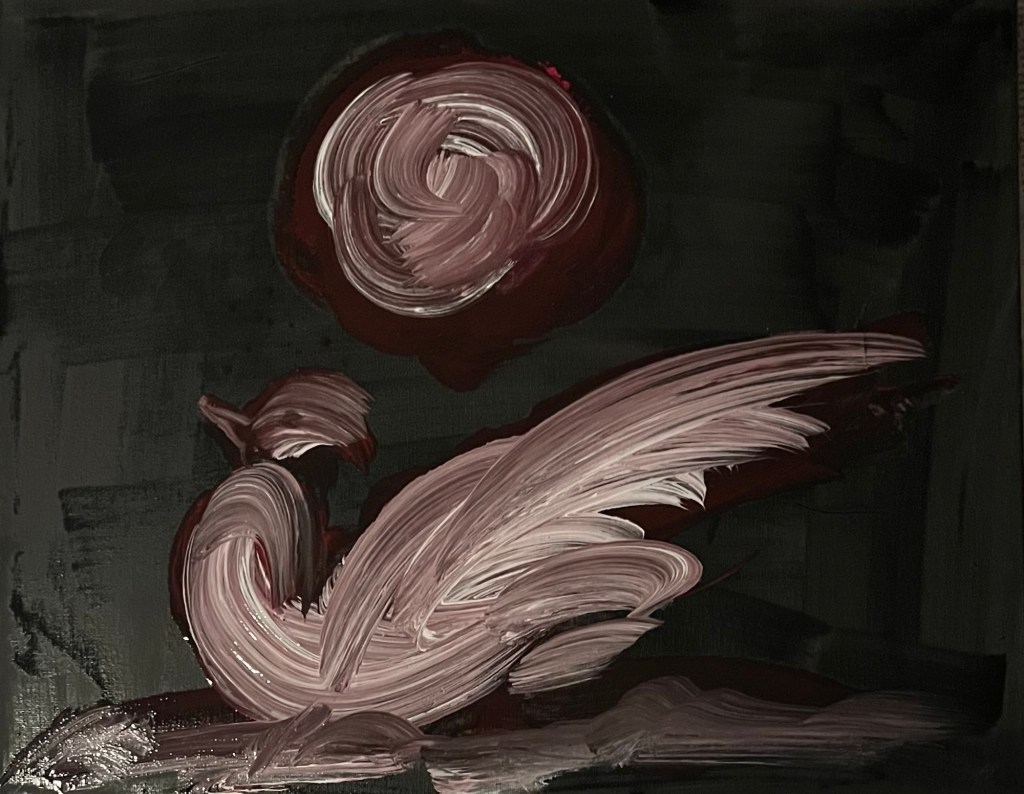
Where beauty does not beg to be understood — it simply waits to be seen.
What makes something beautiful?
And what makes something… not?
When we look at the work of artists like Kandinsky, Picasso, or Pollock, something strikes us — sometimes a harmony, sometimes chaos. But what’s undeniable is this: before them, no one had created anything quite like it. Their work didn’t just reflect their time — it redefined what art could be. It carved out new territory in the way we see and feel.
Yet many people — especially those without formal art training — often find such works confusing, even frustrating. “What does this mean?” they ask. “Why is this famous?”
And here is where the question of aesthetics becomes interesting. Because beauty in art isn’t always about symmetry, clarity, or charm. It’s often about impact — about that strange pull that keeps us looking. The great masterpieces, no matter how abstract or difficult, tend to share one thing: they possess an aesthetic force. Something visual, emotional, or structural that touches us, even if we can’t explain why.
But not all art is created with the same intention.
Some artworks are made to please, to sell, to fit into a familiar frame. These pieces — often highly decorative, trendy, or overly sentimental — serve a purpose, and they have their own market. Like fast food, they satisfy a certain craving. And there’s no shame in enjoying them — just as there’s nothing wrong with loving mac and cheese.
But the aesthetic experience I’m speaking of lives elsewhere.
It doesn’t shout “buy me” — it whispers see me.
It may not match your couch or go viral on Instagram.
It’s the kind of art that resists easy explanation — and lingers long after you’ve looked away.
Sometimes this kind of work is dismissed as strange, cold, or “not beautiful.” But perhaps the discomfort comes not from its lack of beauty — but from its refusal to be obvious.
So the question is not “Do I like it?”
But rather: Am I willing to sit with it?
To feel before I judge?
We often confuse this aesthetic experience with understanding. But is art something to be understood like a textbook? Or is it more like a song or a scent — something that communicates, wordlessly?
In truth, every artwork is born from the life of the artist — their joys, struggles, thoughts, and contradictions. But the work itself does not always need to explain that life. It offers something else: an atmosphere, a tension, a rhythm, a question. It opens a window to the world as they see it — and asks us to look.
Some will feel it deeply. Others won’t.
That doesn’t make one viewer better than the other — but it does remind us that art is not always about recognition. It’s about revelation.
Perhaps we need to let go of the need to “get it.”
Perhaps beauty is not something to grasp, but something to stand before — like a mountain, or the sea.
Not everything needs to make sense to be meaningful.
So the next time we stand in front of a painting and feel confused, maybe that confusion is the beginning — not the end — of an aesthetic experience.
 Felt, Paint & Reflection
One response to “💠 What Is Beautiful? On Aesthetics, Art, and the Mystery of Meaning”
[…] “What Is Beautiful? On Aesthetics, Art, and the Mystery of Meaning”. […]
LikeLike