
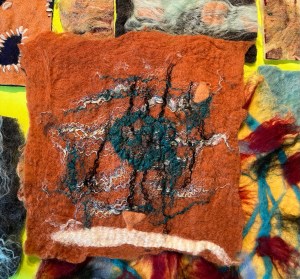
As I grow older, I begin to see my reactions in moments of stress not as flaws in my personality, but as echoes of my upbringing. It’s only now, through life’s challenges and distance from home, that I realise how deeply my emotional responses were shaped by the way I was raised.
Many of us who grew up in Iranian households experienced a kind of love that was profound and protective—sometimes, perhaps, too protective. Our parents, often shaped by struggle themselves, did not want us to suffer. They tried to cushion every fall before it happened: “Don’t run, you might fall.” “Don’t touch that, it’s dangerous.” “Be polite.” “Don’t ask such questions.”
Their intentions were pure. They sacrificed personal dreams, freedom, and rest to give us what they believed was a better life—a safer one, a more successful one. And I am deeply grateful for that.
But somewhere in this sheltering love, we missed out on learning how to fall and get up on our own. We weren’t taught that hardship isn’t just something to avoid—but something to face, to learn from, and to grow through. Emotional resilience wasn’t something we practiced; it was something we were shielded from.
So many of the things I now struggle with—uncertainty, rejection, failure—are not new to life. What’s new is me, learning to meet them without the buffers I once had. As a young student living abroad, far from family, I had to stumble through this learning process on my own. And even now, years later, I still face life’s difficulties with a certain unpreparedness I trace back to childhood.
Just recently, after a frustrating interaction with a German authority, I vented to a friend about the overwhelming formalities and rigid systems. He listened and said simply—but truthfully—“We were not trained for this.” And he was right. We were raised for love, not for bureaucracy. We were taught to be good, not necessarily to be resilient in systems that demand toughness and emotional detachment.
This isn’t a blame. It’s an understanding. Our parents gave us what they could, and they gave it generously. But the emotional toolkit needed for a harsh world—one where success is not always guaranteed and politeness doesn’t always protect—was often missing from our early years.
Now, as we grow into our own roles—whether as artists, educators, or even parents ourselves—perhaps part of healing is to accept both what we were given, and what we still need to learn.
 Felt, Paint & Reflection